Skip to content

Pre-seed · 2026

AI. In your pocket.

A card-sized recorder that turns what you say into your day — written down, summed up, and pointed at what to do next.

Raising $200,000 for 5%

One take. Press to start.

The problem

The best thinking happens away from a keyboard.

Everyone already carries a recorder and almost nobody uses it, because a recording is a chore you have postponed rather than a thing you have finished. The idea at the red light, what the client actually agreed to, what the doctor said — the moments worth keeping are exactly the ones where opening an app is impossible.

  • Voice memos are write-only. Almost nobody plays them back.
  • Phone assistants need a wake word, a screen, and a free hand.
  • Meeting tools only work in meetings that were scheduled.

The product

Press it. Say anything.

One button on a card that lives where your bank card used to. No app to open, no wake word, no screen to unlock. It transcribes, understands, and files — and at the end of the day it hands you a brief: what happened, what was decided, and the handful of things that actually need you.

Form
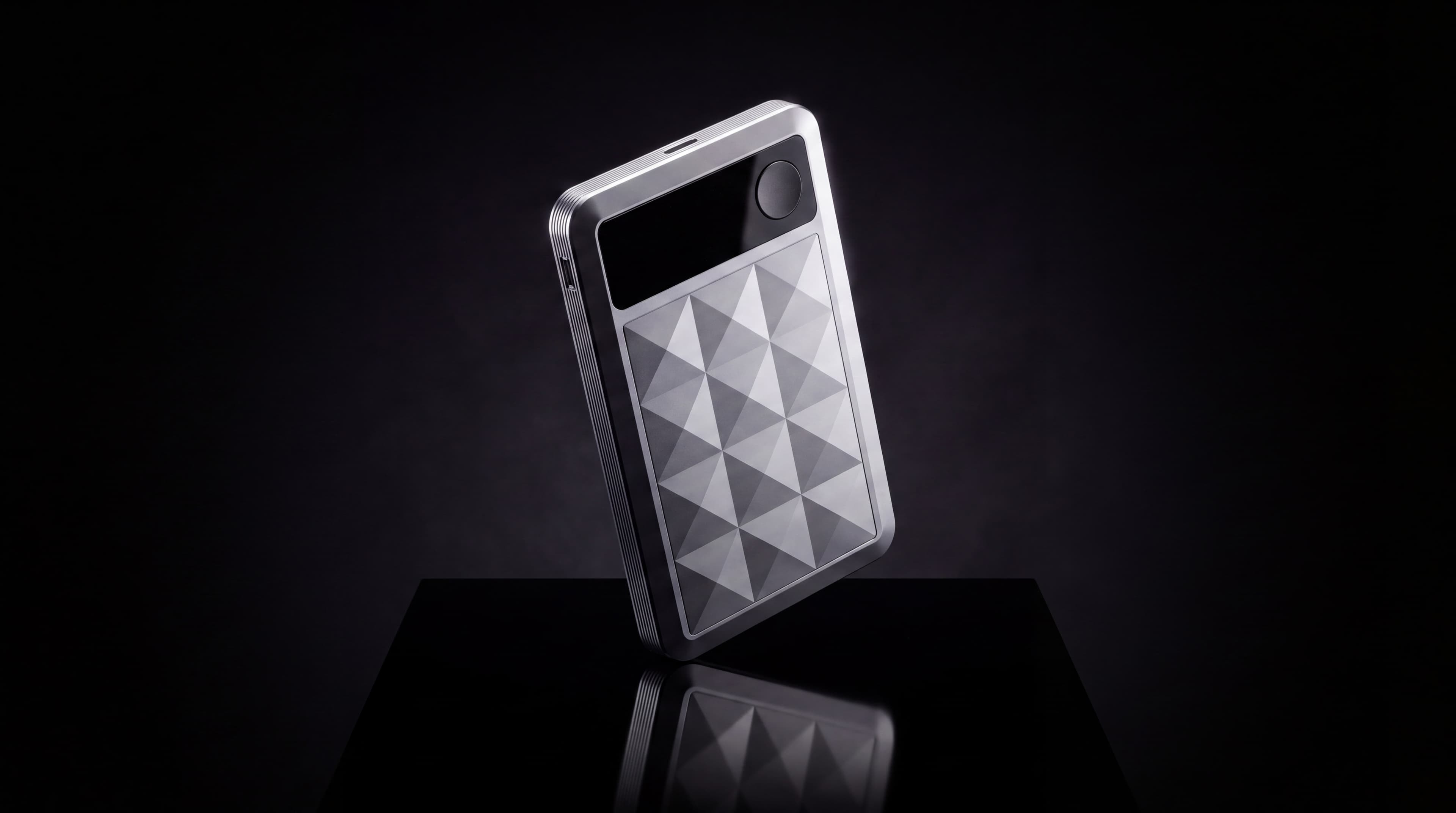
ID-1 card, 3.9 mm
Interface
One button
Display
Live meter, battery, connection
Models
chit one · chit one Pro
chit one Pro floating on a dark studio stage, its faceted face catching a single overhead light.

How it works

Capture, then everything after.

  1. 01

    Capture

    Press and talk. Works offline; syncs when signal returns.

  2. 02

    Understand

    Transcribed, then read for decisions, commitments and next steps.

  3. 03

    Act

    Connected to calendar and mail, so a next step becomes an event or a drafted reply.

The app

Not a transcript. Your day.

Every capture from the day, read and gathered into one brief — what happened, what was decided, and the three or four things that genuinely need you next.

2:14
CHIT ONE PRO · 82%
Recording
6:11
Live transcript
YOU

Okay — walk me through where we landed on the Henderson build.

MAYA

Framing's done. Inspection is Thursday morning, and if it passes we pour the following week.

YOU

I'll need the revised quote before then. Can you send it by Friday?

MAYA

Friday works. We should also loop in the electrician before the pour.

YOU

Good call. Let's do a walkthrough Tuesday at two.

Why now

The hardware got cheap. The models got good.

A capable always-with-you recorder costs a fraction of what it did three years ago, and the intelligence that makes a recording useful only became reliable in the last eighteen months. The window is the gap between those two facts and the point where a phone maker builds it in.

  • Transcription and summarisation are now good enough to trust unattended.
  • A dedicated device wins on the one thing a phone cannot do: zero friction, no screen.
  • Recurring software revenue on a hardware install base is the model that works.

Sources: OpenAI pricing · Stanford AI Index 2025 · Apple Newsroom, WWDC 2024

The comparable

Plaud proved the category.

2M+ devices · $100M+ software ARR

reported profitable, effectively bootstrapped — about $5M of outside capital, ever

Sources: TechCrunch · Jun 2026 · Forbes · Sep 2025 · CB Insights

Plaud proved people pay for a dedicated recorder and then keep paying for the software — and did it without venture scale: crowdfunding, then profit, with its only institutional money (~$5M) arriving after the first $100M of run rate. Meta has since bought Limitless; Amazon bought Bee. The category is being bought, not questioned — and this round buys a production run and a proven funnel, not a market.

The difference

They summarize. We follow through.

They sell
Meeting notes — a summary of the meeting you sat in, read after the fact, or an always-on microphone that hears everything to catch anything.
We sell
One press, anywhere — and a layer that learns your projects and people, compounds with every capture, and lands the next step in your calendar and your mail.

The edge

The device is the easy part.

Anyone can have a recorder made. Nobody else is building the layer above it — the part that knows which project you are talking about, who you owe an answer to, and what you actually meant to do next. That layer is the company. The card is how it gets into your pocket — and the same layer sells to companies as their own: branded devices, the data resident in their VPC, so leadership sees the work as it happens.

  • Context, not transcription

    Transcription is a commodity API. Knowing that "the Henderson quote" is a thing you owe someone on Friday is not.

  • It compounds

    Every capture teaches it your projects, your people and your patterns. Month six is materially better than week one, and a competitor starting fresh is back at week one.

  • It acts

    A summary is a document. An event on Thursday and a drafted reply are outcomes — and the connections that make that possible are software, not silicon.

Personalization

It learns your context.

The same sentence means different things to a contractor, a doctor and a founder. chit adapts to the person carrying it — the vocabulary, the recurring names, the shape of what counts as a next step in their work. That is what turns one device into a product several different people would each call theirs.

  • Learns your recurring projects, people and vocabulary
  • Adapts what counts as a next step to the work you actually do
  • Gets more useful the longer you carry it — the switching cost is the memory
2:14
CHIT ONE PRO · 82%
Recording
6:11
Live transcript
YOU

Okay — walk me through where we landed on the Henderson build.

MAYA

Framing's done. Inspection is Thursday morning, and if it passes we pour the following week.

YOU

I'll need the revised quote before then. Can you send it by Friday?

MAYA

Friday works. We should also loop in the electrician before the pour.

YOU

Good call. Let's do a walkthrough Tuesday at two.

The market

Software widens who this is for.

A recorder that only takes meeting notes sells to people who sit in meetings. A layer that adapts to its owner's context sells to anyone whose work happens away from a desk — and each segment reached is the same hardware with a different software posture, not a new product line.

  • Founders and managers11.1M US
  • Trades and field service12.5M US
  • Consultants and agencies1.8M US
  • Clinicians1.5M US
  • Students and researchers3.3M US
  • Field sales1.5M US

Bottom-up, US only: about 32 million seats across these six segments, counted from BLS, AAMC, NCES and NSF data. At $108 a year of membership that is a ~$3.4B software ceiling before any device revenue — and the BLS counts exclude the self-employed, so trades and consultants run higher than shown.

Sources: BLS OEWS · May 2025 · AAMC · 2024 · NCES · Digest 2023 · NSF GSS · fall 2024

The model

$129 once. $9 a month.

Hardware gets it into a pocket. The membership is the business — it runs the transcripts, the daily brief and the connections, and it is what turns a one-time buyer into an install base. The attach rate this banks on has a benchmark: Plaud reports nearly half of its device buyers upgrade to a paid plan.

Device
$129 · $179 Pro
Membership
$9 / month
Unit margin
≈50% — $65 landed on $129
Payback
No CAC yet — this round buys that number

Sources: TechCrunch · Jun 2026 — ~50% attach · Plaud pricing — $159 device, $8.33–$19.99/mo

Where we are

Built, not announced.

The product exists. The manufacturer has produced dimensioned drawings for both models and units have been made. What has not happened yet is going to market — which is exactly what this round is for.

  • Hardware

    Two models drawn and produced with the manufacturer

  • Brand and site

    Live at hichit.com

  • Software

    The app is built — transcription, the daily brief, context-specific accounts, and the calendar and mail connections.

  • Demand

    Three signed company LOIs — one in healthcare AI, one in logistics, one in automotive.

Team

Two builders.

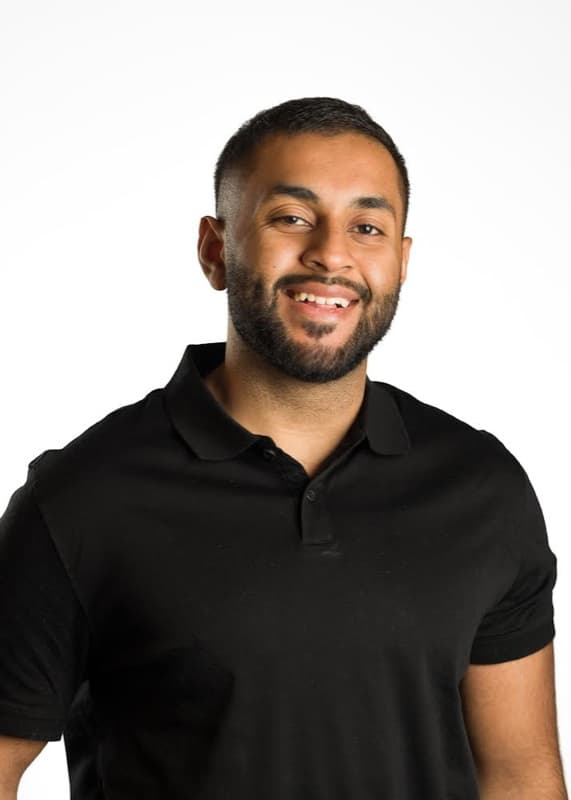
Shafay Ahmed

Co-founder · Georgia Tech

Forward-deployed engineer for companies including GitHub, Aisera and Couchbase — the job where you ship someone's software inside someone else's walls.

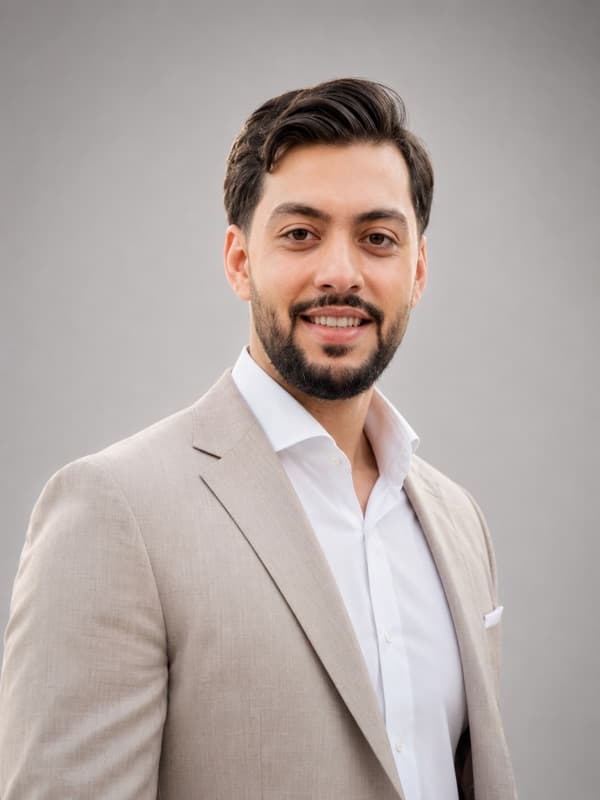
Ahmad Agad

Co-founder · Georgia Tech

Founded Keelway; owner-operator of CCC Logistics, a fleet of over a hundred trucks — the customer this device is built for, running the company that buys it.

The ask

$200,000 for 5%.

Pre-seed · $4M post-money

Ignition, not runway to nowhere. Enough to get a production run out the door and prove the funnel converts.

Go to market
50% — proving the funnel
Production run
20% — the first 100-unit run
Software
10%
Buffer
20%

Half the round goes to go-to-market on purpose: the device is made, the app is built, and the only number this company does not have yet is what a customer costs. Six months of runway to get it.

Instrument: Post-money SAFE, $4M cap

Contact

Let's talk.

Thirty minutes, whenever suits. The calendar below is live — pick a slot and it is booked.